_edited.png)
How to Clear Blocked Drainage Scuppers Before Damp Sets In
.svg)
Drainage scuppers are openings built into parapet walls, balconies, or flat roofs that allow surface water to drain away from the building rather than pooling on it. When they block, water backs up, saturates the roof membrane, and works its way into the structure — causing damp, mould, and costly repairs. Clearing them is straightforward maintenance that protects the whole building.
Key takeaways
A blocked scupper can cause standing water to accumulate within hours of a single heavy rain event, accelerating roof membrane deterioration.
Scuppers should be inspected at least twice a year — once in autumn before leaf fall peaks, and once in spring after winter debris accumulates.
The most common blockage materials are compacted leaf matter, moss clumps, bird nesting material, and windblown grit.
Damp caused by poor roof drainage often appears internally weeks after the original blockage — meaning the visible symptom arrives long after the preventable cause.
On multi-storey commercial buildings, scupper access requires the same height-safety planning as any other elevated maintenance task.
What are drainage scuppers, and why do they matter for commercial property?
A scupper is a deliberately formed gap or channel at roof level, set flush into the base of a parapet wall or at the edge of a flat roof deck, that gives surface water a route off the building. Unlike internal drains, scuppers discharge water outward — usually into a downpipe, hopper head, or directly to ground via a spout.
For flat-roofed commercial properties in particular, scuppers are often the primary — or sole — drainage mechanism. If they fail, there is nowhere else for the water to go. Even a shallow pool of standing water exerts continuous pressure on the roof membrane beneath it, hastening failure at seams and flashings.
What blocks a scupper?
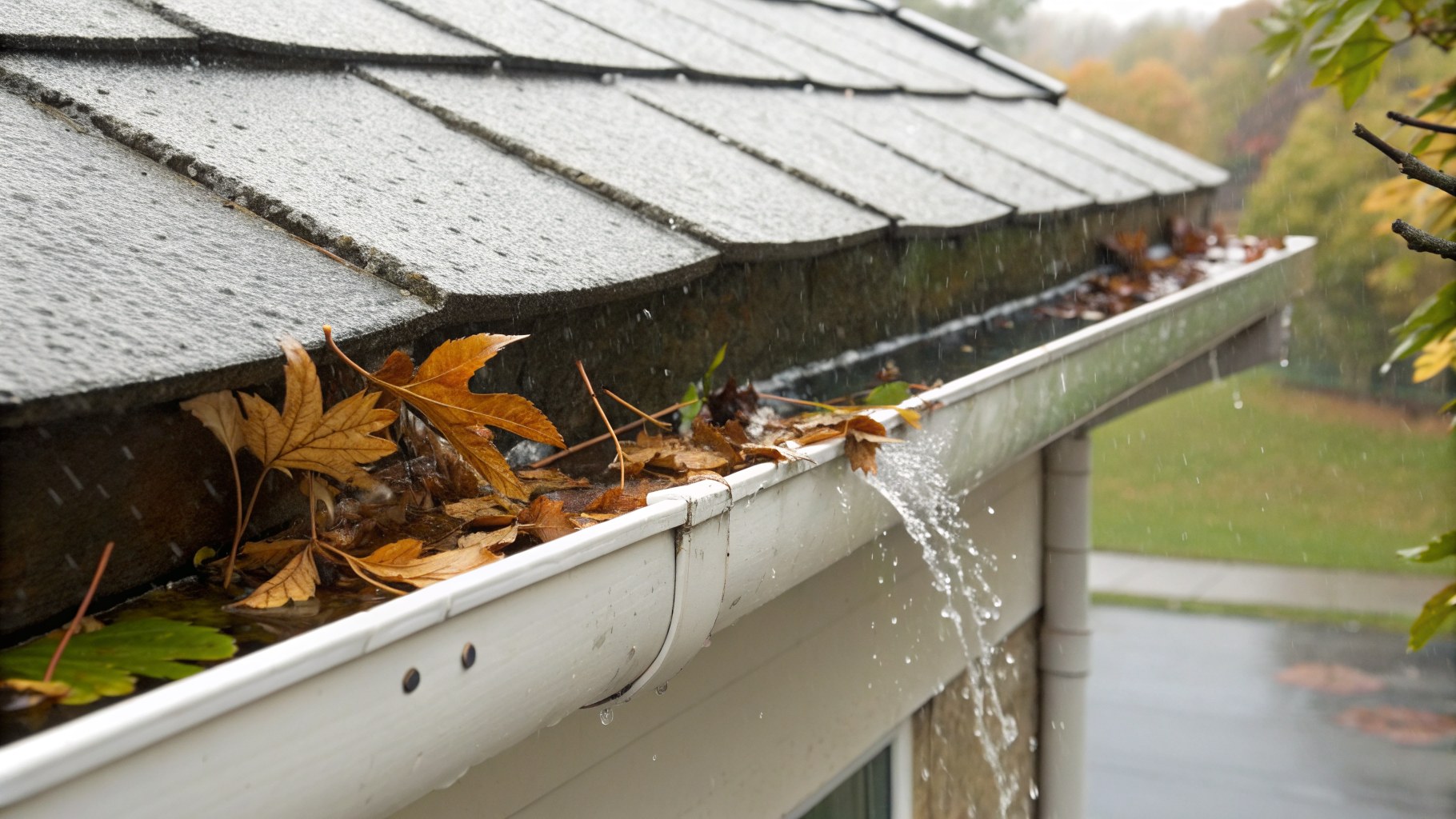
Scuppers block for one of three reasons: debris accumulation, physical damage, or vegetation growth. Leaf matter carried by wind compacts into the scupper opening and acts like a plug. Moss and lichen established around the opening extend roots into the gap over time. Bird nesting material — twigs, feathers, and dried vegetation — is especially dense and difficult to shift without deliberate effort.
Physical damage is less common but worth checking: if the scupper outlet has been knocked out of alignment, or if sealant around the frame has shrunk and created a lip that catches debris, the opening effectively narrows even without active blockage.
How do you clear a blocked drainage scupper?
Clearing a blocked scupper is a four-step process:
Access the roof safely. On single-storey buildings this may mean a short ladder; on any multi-storey commercial property, plan the access method properly — whether scaffolding, a mobile elevated work platform, or rope access. Our existing guidance on rope access versus cherry picker bookings is directly relevant here.
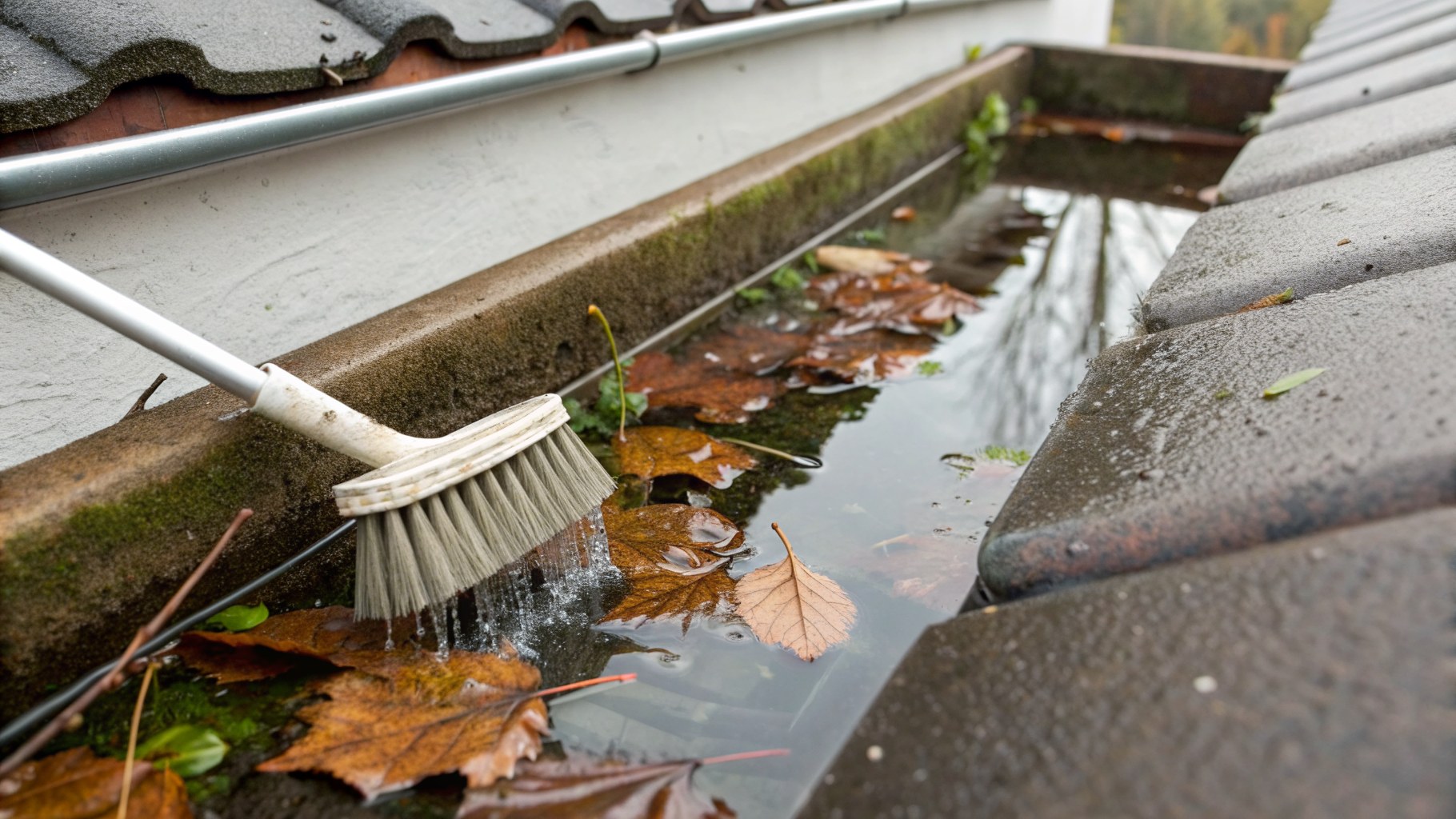
Remove loose debris by hand. Wearing gloves, pull out compacted leaf matter, nesting material, and moss from the opening. Do not use a pressure washer as the first step — forcing water through a partially blocked scupper can drive debris deeper into the downpipe.
Flush and confirm flow. Once the opening is clear, pour water through steadily and watch the outlet below. Water should run freely within seconds. A sluggish flow suggests a partial blockage further down the downpipe.
Inspect the surrounding area. Check the roof membrane and flashing within 300mm of the scupper for bubbling, cracking, or lifted edges — signs that water has already been sitting against the surface.
Scuppers versus internal drains: which presents greater risk when blocked?
Drain type | Primary risk when blocked | Typical access difficulty | Visible warning sign |
Scupper (parapet/edge) | Overtopping and wall saturation | Moderate — roof edge work | Staining on external wall face |
Internal roof drain | Hidden pipe backing up under membrane | Low — often ground-level access | Internal ceiling damp or staining |
Gutter and downpipe | Overflow down façade | Low to moderate | Visible overflow during rain |
Scuppers present a specific risk that internal drains do not: when they overflow, water runs down the external face of the parapet wall directly. That wall saturation is what drives damp into the building fabric — often appearing as internal staining on top-floor ceilings or upper walls.
When should you prioritise scupper clearing over other maintenance tasks?
Clear scuppers first when: a prolonged rain event is forecast, the building has a flat roof with no redundant drainage route, or you have already seen unexplained damp patches appearing on top-floor ceilings. Autumn is the highest-risk period because falling leaves can block an opening overnight.
Where a building has both scuppers and internal drains, the scuppers should still be checked separately — they often serve as overflow relief, and a blocked overflow scupper is invisible right up until it isn't.
The Aston Maintenance team covers commercial and residential properties across Oxfordshire, Buckinghamshire, London, Warwickshire, and Northamptonshire, and scupper clearing forms part of the rooftop maintenance work we carry out on flat-roofed commercial buildings throughout those areas. If you are unsure whether your roof drainage is performing as it should, that uncertainty is itself a reason to arrange an inspection.
Frequently Asked Questions
What is the purpose of scuppers in a building? Scuppers provide a drainage outlet for surface water at roof or balcony level, channelling it away from the building structure before it can pond and cause membrane or wall damage. On flat-roofed commercial properties they are frequently the primary drainage mechanism, making their upkeep critical rather than optional.
What does "scupper" mean in architecture? In an architectural context, a scupper is an opening cut through a parapet wall, balcony upstand, or roof edge specifically to allow water to escape. The term originates from nautical use — scuppers on a ship's deck perform exactly the same function, draining water overboard.
How can I tell if a scupper is blocked without going onto the roof? The clearest ground-level indicator is the absence of water discharging from the scupper outlet during or immediately after rainfall. Staining or green algae growth on the external wall directly below the scupper also suggests water has been sitting against the wall rather than flowing away cleanly.
Can a blocked scupper cause internal damp? Yes. Water pooling behind a blocked scupper saturates the parapet wall from the outside inward. Because masonry absorbs moisture slowly, the internal damp patch may not appear until days or weeks after the blockage — making it easy to misdiagnose the cause.
How often should commercial properties have their scuppers inspected? Twice a year is the practical minimum: once in October or November before peak leaf fall, and once in March after winter debris has accumulated. Buildings surrounded by trees or in areas with significant bird activity may need quarterly checks.
Written by the Aston Maintenance team — a family-run property maintenance business with over 25 years' experience serving commercial and residential clients across Oxfordshire, Buckinghamshire, London, Warwickshire, and Northamptonshire.
Last updated: 25 September 2026

Comments