_edited.png)
What are rooftop cleaning services and how do they work for commercial properties?
.svg)
Last updated: 1 September 2026
Rooftop cleaning services remove biological growth, debris, and accumulated dirt from commercial building roofs using specialist equipment, appropriate cleaning solutions, and safe access methods. For small business owners managing a commercial property, a professional rooftop clean protects the structure, extends the roof's serviceable life, and keeps the building looking well-maintained.
Key takeaways
Moss, algae, and lichen are the primary biological threats to commercial flat and pitched roofs; left untreated, they trap moisture and accelerate surface deterioration.
Professional rooftop cleaning for commercial properties in the UK typically uses soft washing, pressure washing, or biocide treatment — and the right method depends on roof material and contamination level.
Aston Maintenance has over 25 years of property maintenance experience across Oxfordshire, Buckinghamshire, London, Warwickshire, and Northamptonshire.
Most commercial roofs benefit from a professional inspection and clean every 1–2 years, depending on surrounding tree cover and local weather exposure.
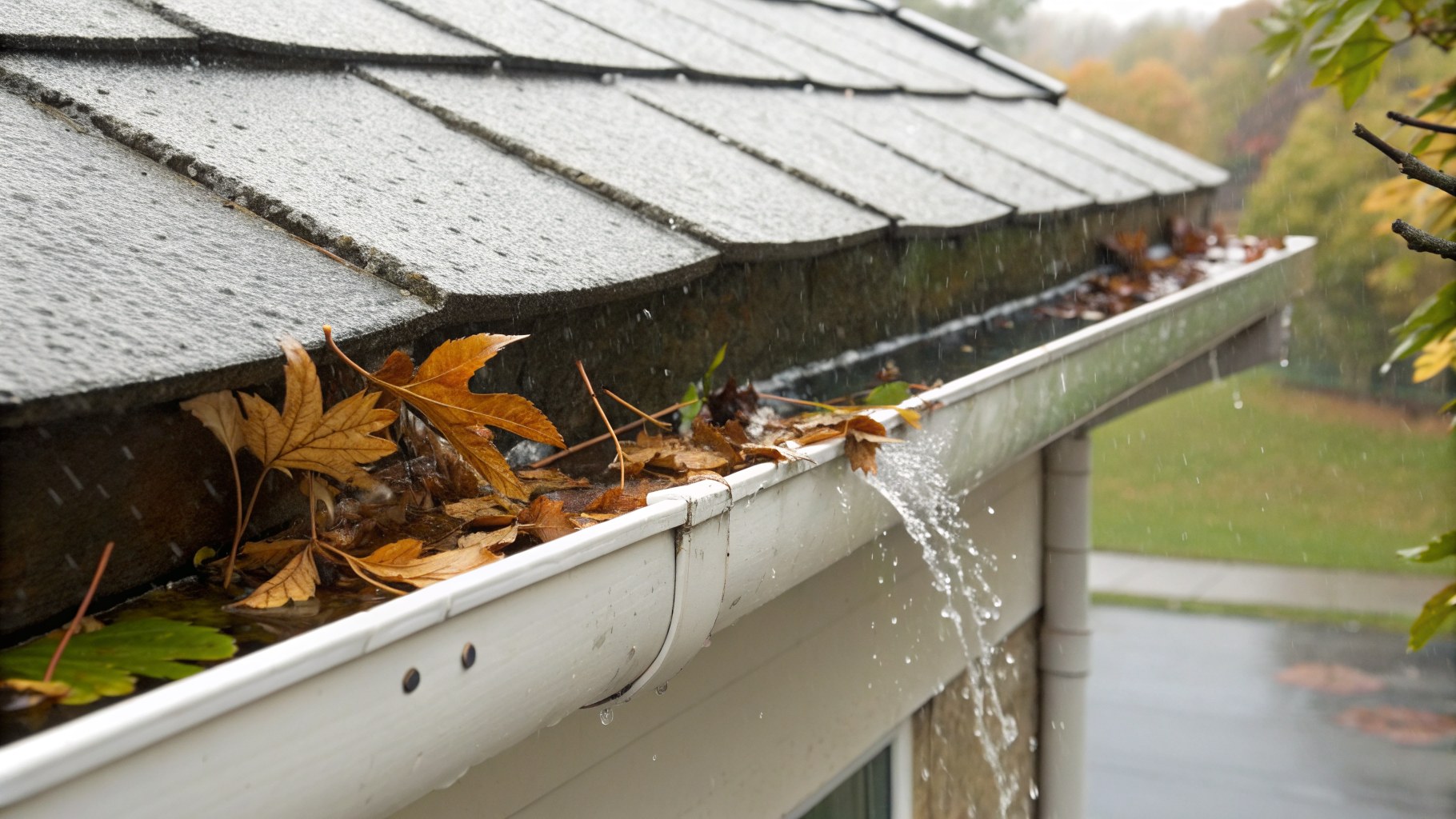
Untreated moss and debris blockages are a leading cause of premature gutter failure and water ingress on flat commercial roofs.
A rooftop clean is meaningfully cheaper than an emergency roof repair or premature re-roofing — prevention is the straightforward financial argument.
What exactly is commercial rooftop cleaning?
Commercial rooftop cleaning is the professional removal of moss, algae, lichen, bird fouling, leaf debris, and atmospheric grime from the surface of a commercial building's roof. It is distinct from domestic roof cleaning because commercial roofs are larger, often flat or low-pitch, and frequently carry additional assets — HVAC units, solar panels, extraction vents — that require careful working around.
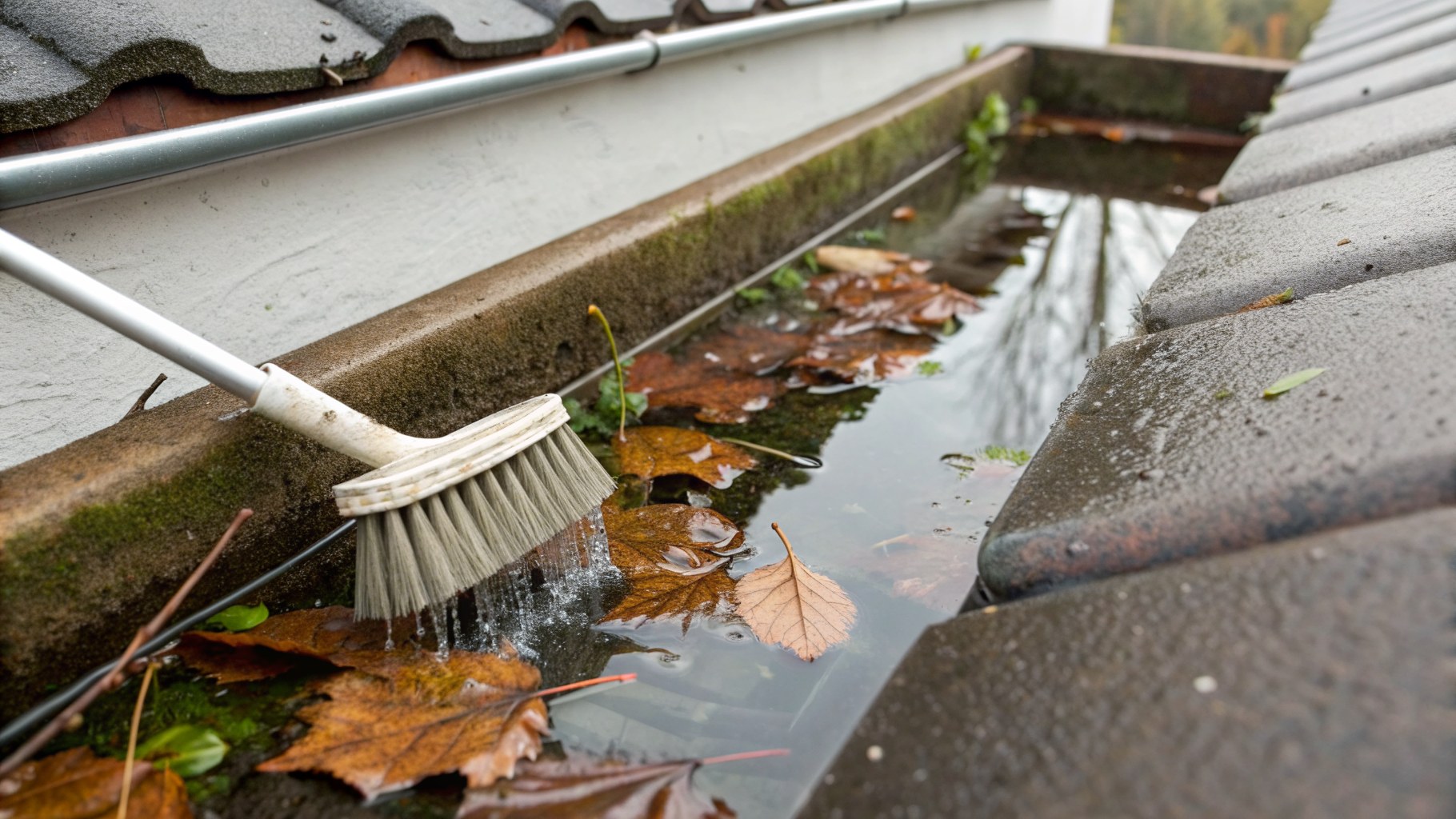
The process typically combines physical debris clearance (removing leaves and compacted moss by hand or with soft brushes), a cleaning treatment suited to the roofing material, and a post-treatment biocide or sealant application to slow regrowth. Access is arranged via scaffolding, cherry pickers, or rope-access systems depending on the building's height and roof profile.
Why does rooftop condition matter for small business owners?
A roof in poor condition creates a slow-moving financial problem. Moss and algae retain water against the roof surface, which accelerates the breakdown of felt, EPDM rubber, asphalt, and tile materials. On flat commercial roofs — the most common type on UK retail units, offices, and light industrial buildings — standing water combined with biological growth is the fastest route to membrane failure and water ingress.
Water ingress damages stock, equipment, ceilings, and electrics. It also triggers insurance complications. Many commercial property insurance policies include a maintenance obligation; a visibly neglected roof can give an insurer grounds to contest a claim. Keeping the roof clean is therefore part of responsible property management, not simply aesthetics.
What methods do rooftop cleaning services use?
Three core methods are used across the commercial property sector, and each suits different roof types and contamination levels.
Soft washing uses low-pressure water combined with a biodegradable cleaning solution (typically sodium hypochlorite-based) to kill biological growth at the root. It is the safest method for EPDM flat roofs, felt, and single-ply membranes where high pressure would damage the surface. The biocide continues working after the clean, and the dead biological matter washes away naturally over subsequent rainfall.
Pressure washing uses higher water pressure to remove heavier debris, compacted moss, and ingrained grime. It is appropriate for concrete, certain slate, and clay tile roofs on commercial buildings where the surface can withstand the force. It is rarely appropriate for flat membrane roofs and must be calibrated carefully to avoid forcing water under laps or fixings.
Biocide treatment only (without pressure washing) involves applying a fungicidal or algicidal spray and leaving it to work over several weeks. This approach is lower-cost and lower-disruption — useful for roofs with light biological growth or where access constraints limit full cleaning. It is a maintenance treatment rather than a remedial one, and it works best when applied before heavy contamination takes hold.
Soft washing vs pressure washing vs biocide treatment: which is right for your roof?
Method | Best for | Typical cost range | Limitation |
Soft washing | EPDM, felt, single-ply membrane flat roofs; light-to-moderate biological growth | £3–£8 per m² | Slower visible results; requires follow-up visits for heavy growth |
Pressure washing | Concrete, clay tile, or slate roofs; heavy compacted moss or debris | £2–£6 per m² | Risk of surface or seal damage if incorrectly applied; not suitable for membranes |
Biocide treatment only | Light surface algae; maintenance between full cleans | £1–£3 per m² | Does not remove existing debris; slower-acting |
Combined treatment | Commercial roofs with mixed surfaces or heavy biological contamination | £4–£10 per m² | Higher upfront cost; requires experienced operatives to manage different zones |
Note: prices are indicative ranges for commercial properties in England and will vary with roof size, access complexity, and contamination level. Request a site-specific quote before budgeting.
How does a professional rooftop clean work, step by step?
A well-run commercial rooftop clean follows a clear sequence. Skipping steps — particularly the pre-inspection and post-treatment stages — is where cheaper operators cut corners.
Site survey and access assessment. The cleaning team surveys the roof, identifies the material type, maps any fragile or specialist surfaces (skylights, solar panels, ventilation units), and determines the safest access method.
Risk assessment and method statement. For commercial properties, a written RAMS (Risk Assessment and Method Statement) is standard practice. This documents safe working at height procedures, PPE requirements, and emergency arrangements.
Debris clearance. Loose leaf matter, compacted moss, and large biological growth are removed physically before any cleaning solution is applied. This material is bagged and removed from site.
Application of cleaning solution. Soft wash solution or biocide is applied at the correct dilution rate for the roof type. On a large commercial roof, this is typically carried out using a low-pressure sprayer with extended lances to reach all areas safely.
Dwell time. The solution is left to work for a specified period — this varies by product and contamination level.
Rinse or neutralisation. Depending on the method used, the roof surface is rinsed with clean water, or the treatment is left to neutralise naturally. Gutters and downpipes are checked and cleared at this stage.
Post-treatment application. A biocide or sealant is applied to inhibit regrowth. This is the stage most commonly skipped by low-cost operators, and its absence significantly shortens the time before the roof requires retreatment.
Final inspection and documentation. The team carries out a final walkover inspection, photographs the completed work, and provides a written record for the client's property maintenance file.
What are the risks and limitations of rooftop cleaning?
Rooftop cleaning carries genuine risks that are important to understand before instructing any contractor.
Working at height is the most significant safety consideration. Commercial rooftops require compliant access arrangements under the Work at Height Regulations 2005. Any contractor who cannot provide a current RAMS and evidence of appropriate insurance should not be engaged.
Surface damage is possible if the wrong method is used. Pressure washing a flat membrane roof, applying too-concentrated a biocide to a green roof, or using hard brushes on fragile slates can cause damage that costs more to repair than the clean saved.
Chemical runoff is a consideration on roofs adjacent to planted areas, waterways, or SUDS drainage. Biodegradable cleaning solutions reduce but do not eliminate this risk, and responsible operators brief clients on any precautions needed.
Temporary appearance decline is worth communicating to building occupants. Immediately after a soft wash, a roof may look no different or even darker before the dead biological matter begins to wash away. This is normal and typically resolves within 4–8 weeks of rainfall.
How often should a commercial roof be cleaned?
Most commercial roofs in the UK benefit from a professional clean every 12–24 months. The right frequency depends on four factors: the density of surrounding tree cover (which drops organic matter), local air quality, the roof material (porous surfaces harbour growth faster), and whether the previous clean included a biocide post-treatment.
A flat EPDM roof in a town-centre location with moderate tree cover and annual biocide treatment may remain in good condition on an 18-month cycle. A pitched felt roof adjacent to woodland without post-treatment may need attention every 12 months. The most reliable approach is to book an annual inspection even if a full clean is not needed every year — early-stage moss is far easier and cheaper to treat than heavily colonised growth.
Teams like those at Aston Maintenance can advise on a realistic maintenance schedule after an initial site visit, which removes the guesswork for property managers overseeing multiple sites.
How do you choose a rooftop cleaning contractor for a commercial property?
Choosing the right contractor matters more for rooftop work than for most other property maintenance tasks, because errors are expensive to correct and the safety stakes are real.
Check for the following before instructing anyone:
Public liability insurance of at least £2 million (many commercial landlords and managing agents require £5 million).
Working at height qualifications — operatives should hold PASMA (for mobile towers) or IPAF (for powered access) certification as appropriate.
Written RAMS provided before any work begins, not on the day.
Clear specification of the cleaning method, products used, and post-treatment included — vague quotes are a warning sign.
References or verifiable experience with commercial properties of similar size and roof type.
Aston Maintenance operates across Oxfordshire, Buckinghamshire, London, Warwickshire, and Northamptonshire and brings more than 25 years of experience to commercial and residential property maintenance. For small business owners who want a single point of contact for rooftop cleaning alongside gutters, fascias, and other building envelope maintenance, that breadth of service simplifies procurement considerably.
Frequently Asked Questions
How much does commercial rooftop cleaning cost in the UK? Pricing varies with roof size, material, access complexity, and contamination level. Indicative ranges run from £2–£10 per m² depending on method, with combined soft washing and biocide post-treatment at the higher end. A site visit and written quotation is the only reliable way to establish cost for a specific building.
Is rooftop cleaning covered by commercial property insurance? Cleaning itself is a maintenance cost and is not typically covered by property insurance. However, maintaining the roof — including periodic cleaning — may be a condition of keeping your buildings cover valid. Check your policy schedule and speak to your broker if unsure.
How long does a commercial rooftop clean take? For a standard small-to-medium commercial building (250–500 m² roof area), a full clean including debris removal, treatment, and post-treatment application typically takes one full working day. Larger or more complex roofs, or those requiring scaffolding erection, will take longer.
Will rooftop cleaning disrupt my business operations? In most cases, a rooftop clean does not require the building to close. Access equipment is positioned externally, and operatives work above rather than through occupied space. Your contractor should brief you on any noise or access restrictions relevant to your specific building before work begins.
Can rooftop cleaning damage solar panels or HVAC units? A properly briefed team will work around rooftop assets without cleaning them (unless specifically instructed to do so under a separate scope). Solar panel cleaning is a distinct service with its own method and products. Confirm with your contractor which assets are in and out of scope before work begins.
What is the difference between a roof clean and a roof inspection? A roof inspection is a structural and condition assessment carried out by a roofing contractor or surveyor — it identifies repairs needed and assesses remaining serviceable life. A roof clean removes biological growth and debris but does not constitute a structural assessment. Some cleaning contractors will flag obvious defects during their walkover inspection, but this is not a substitute for a formal survey.
How soon after rooftop cleaning will I see results? With pressure washing, results are immediate. With soft washing, the roof may look similar immediately after treatment; visible improvement as dead growth washes away typically takes 4–8 weeks depending on rainfall. Biocide-only treatment follows a similar timeline. Your contractor should set these expectations clearly before work begins.
Author: Written by the team at Aston Maintenance, a family-run property maintenance business with over 25 years of experience serving commercial and residential properties across Oxfordshire, Buckinghamshire, London, Warwickshire, and Northamptonshire.
Last updated: 1 September 2026
Comments